
3.11.19
What luxury to have a Sunday sleep in! Plus baked beans for brekky. We’re loving having some ‘down’ time in our little lochside cottage, ‘Pier View’.
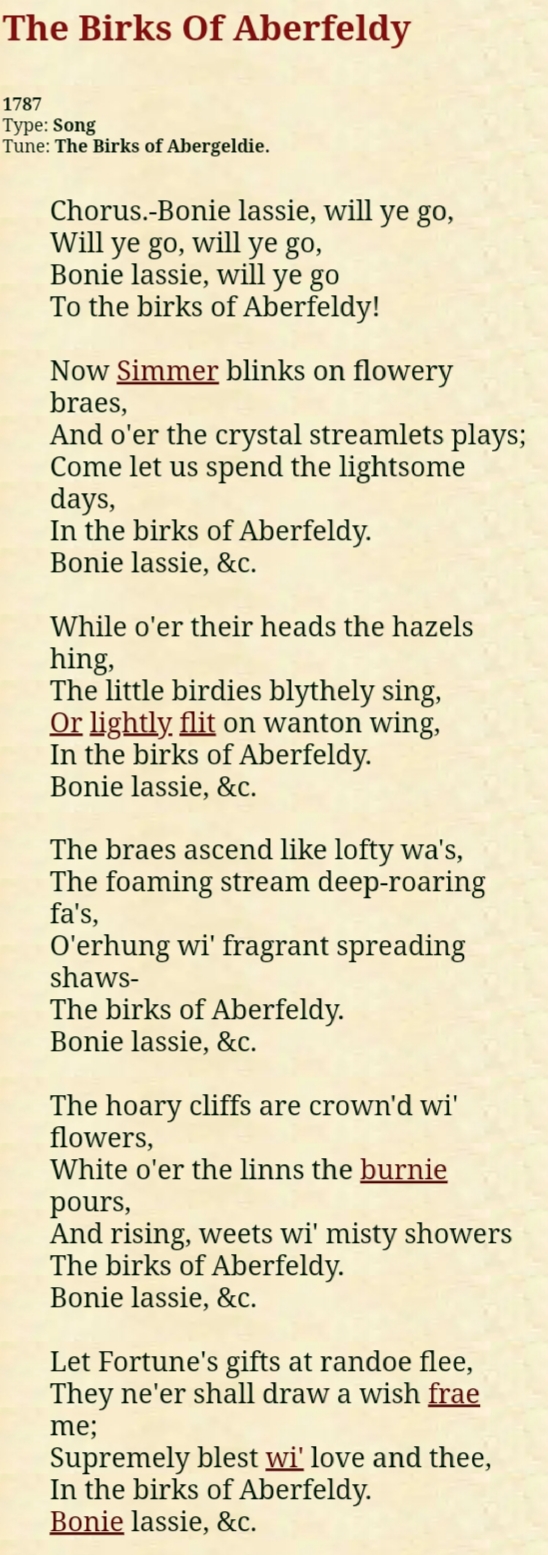
Aberfeldy is our nearest ‘big’ town, and was made famous by Scotland’s beloved national bard, Robbie Burns, in his poem/song ‘ The Birks of Aberfeldy’.
I guess if you look at it another way, maybe it was Aberfeldy that made Robbie Burns famous??
Birks is the Scottish word for Birch (trees), and in Aberfeldy, they line each side of a beautiful valley, with a babbling brook in between. This was the inspiration for RB’s poem.
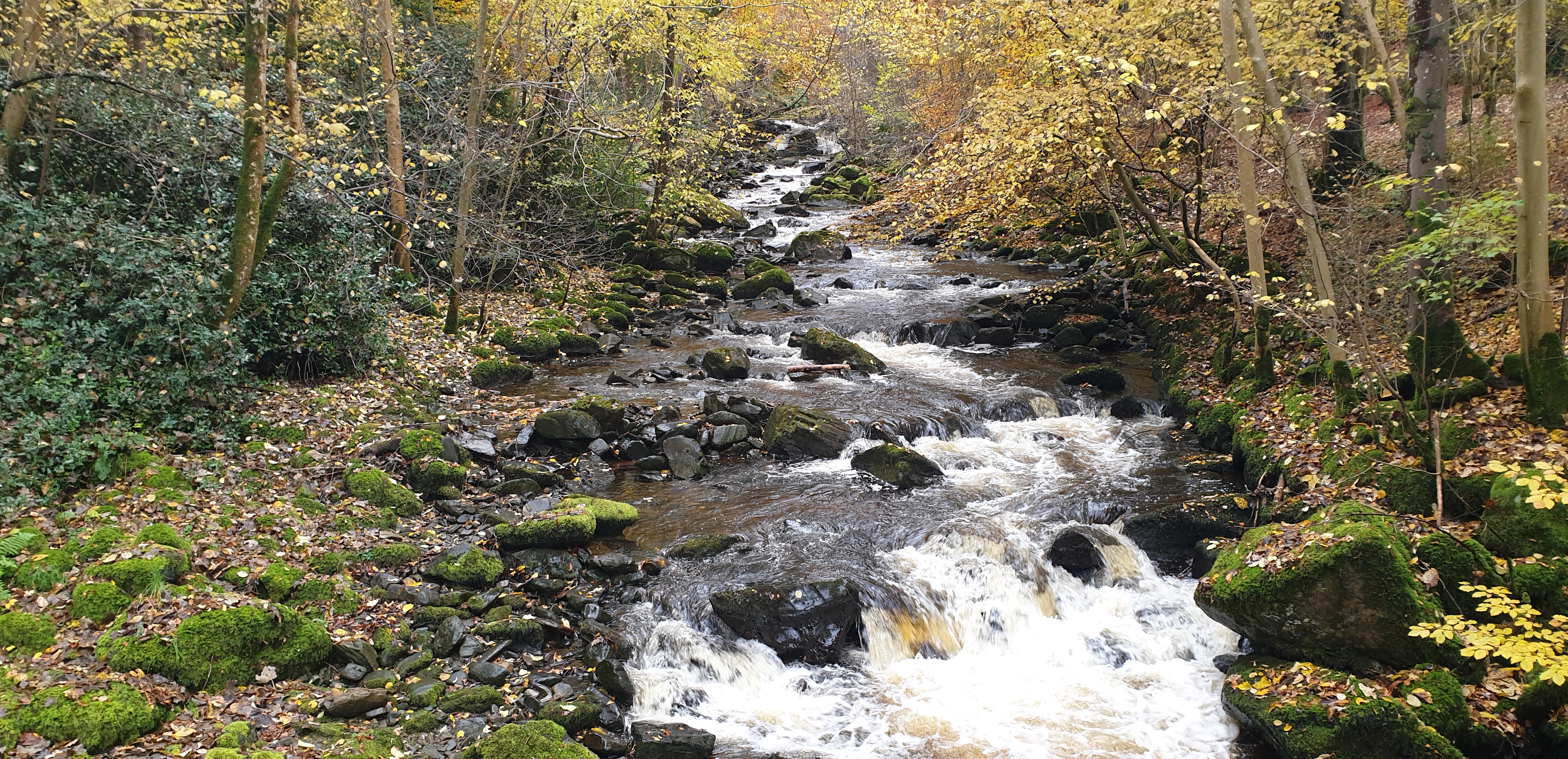
I confess to knowing nothing about Robbie Burns. My education in high school English lessons was limited to Shakespeare and John Donne. So it was time to do some research.
From what I could learn, RB was certainly a character! He fell in love and first started writing poetry at the age of 15, and from then on continued to do so! He must have had an amazing libido. Fathering 13 children to 5 different women (including 2 sets of twins), marrying only one of them, openly falling in love with another 2 women as well, phew! And he died at age 37! In between all that he managed to write over 700 poems and songs. Not hard to see what he died from- the poor bloke must have been suffering terribly from RSI!
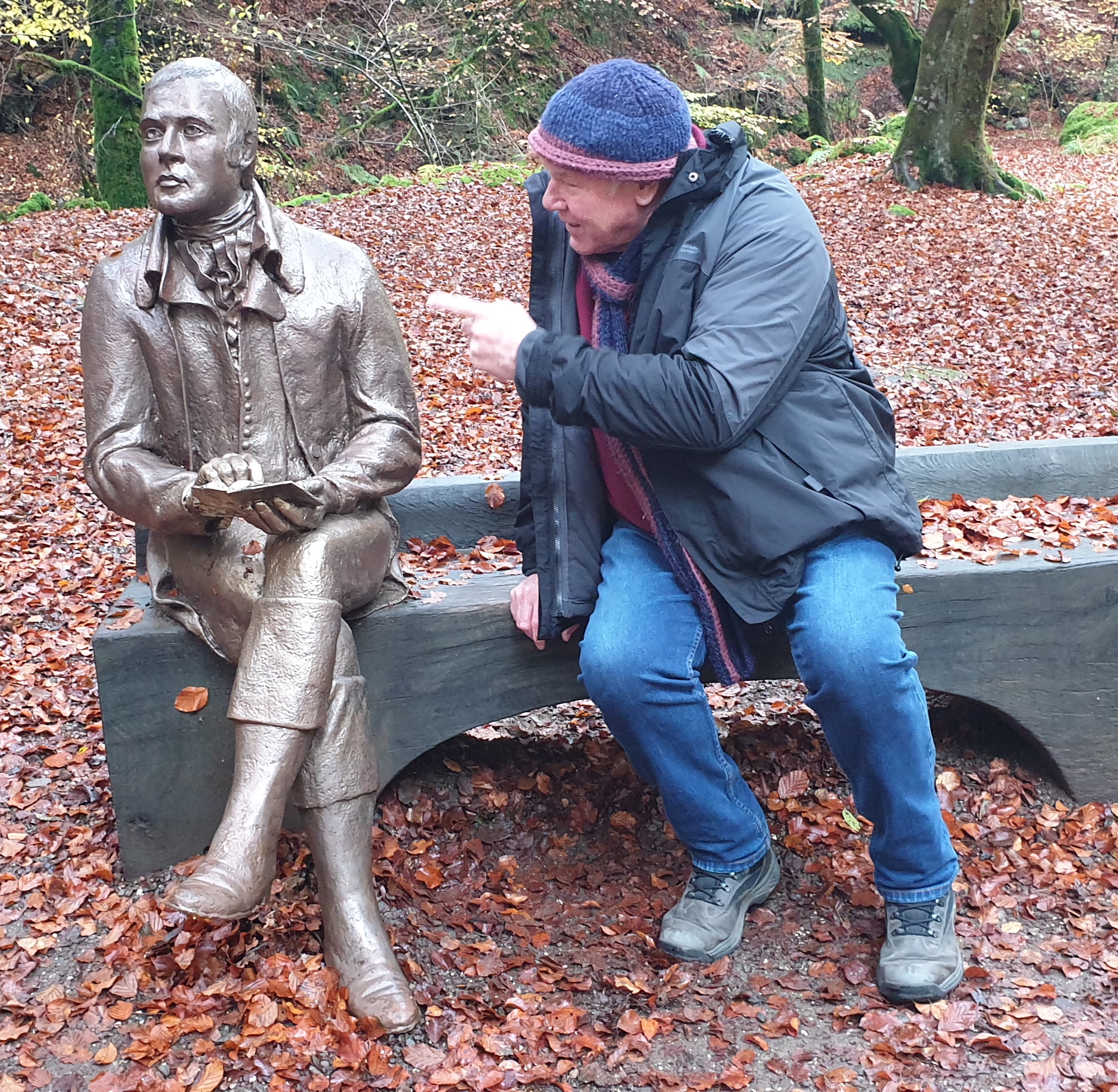
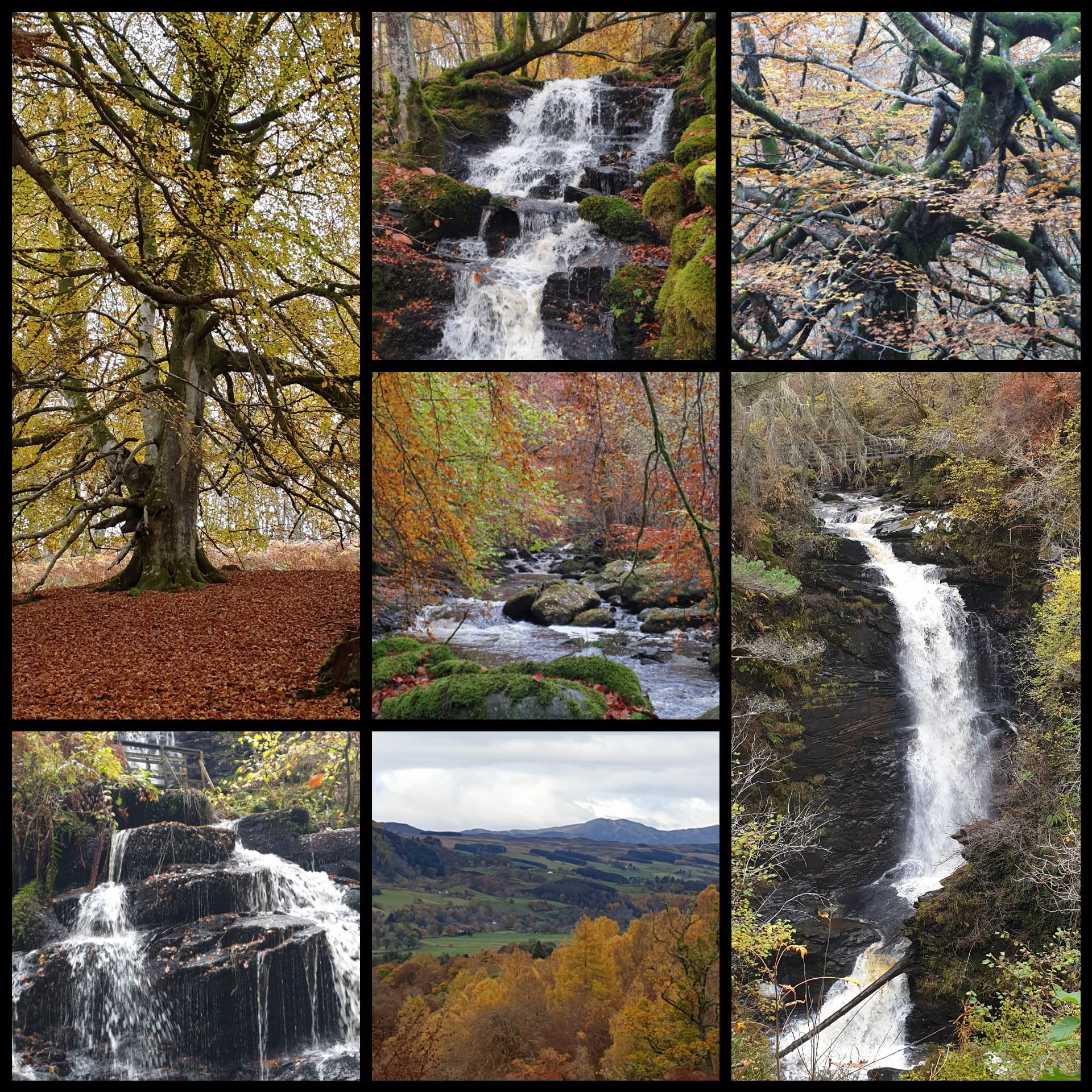
It was a strenuous walk up through the ‘birks’, eventually passing several waterfalls. For the most part, we were alone, except for happening upon the occasional contemplative poet.
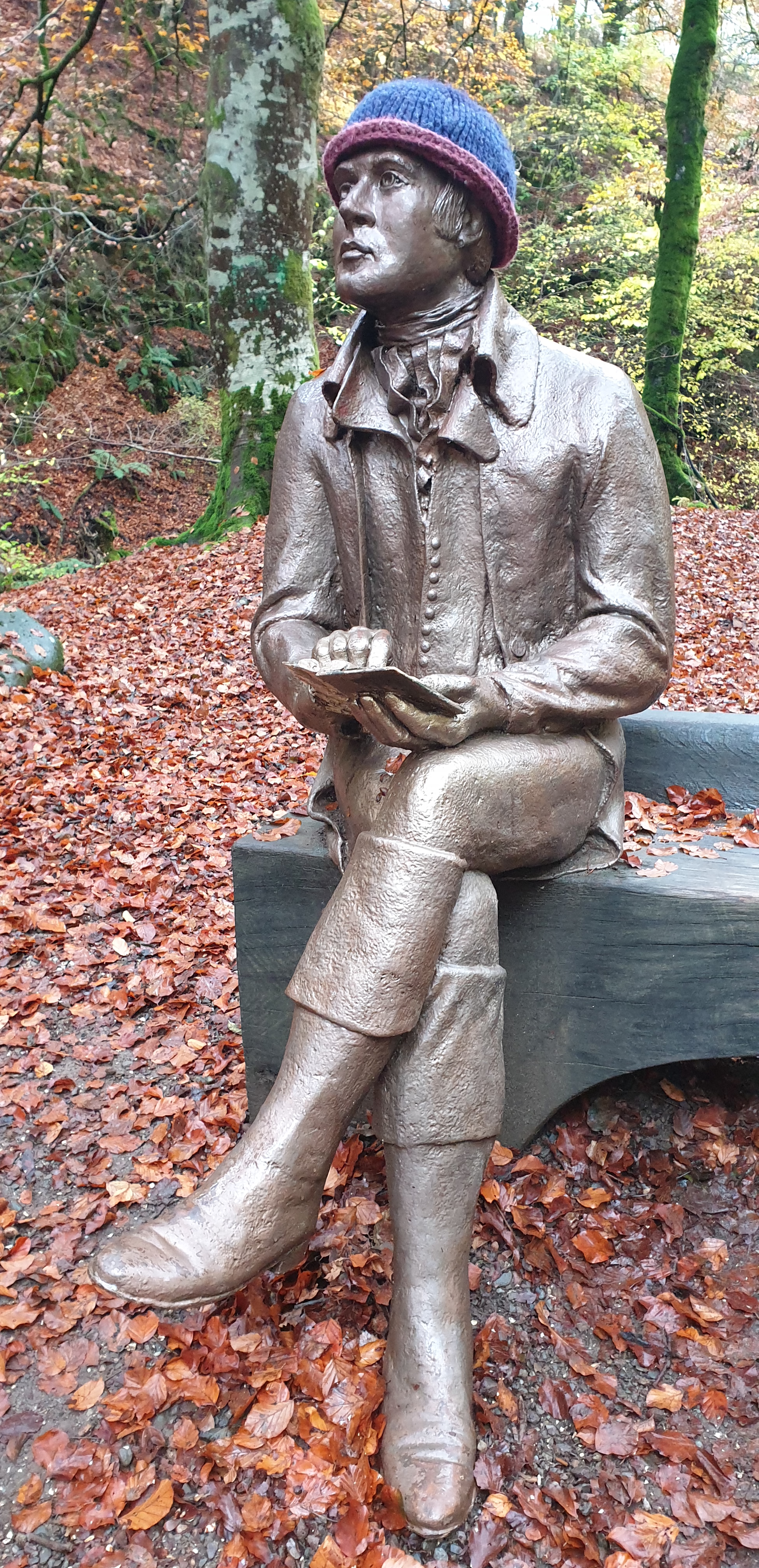
John had an attempt at telling the Bard that his poetry was rubbish, as the rhyming was a bit ‘sus’, but the response was disappointing.
It was a very peaceful and atmospheric little valley and the autumn colours were beautiful. Every now and then, a breath of wind would stir the leaves into action and they’d flutter down in front of you.
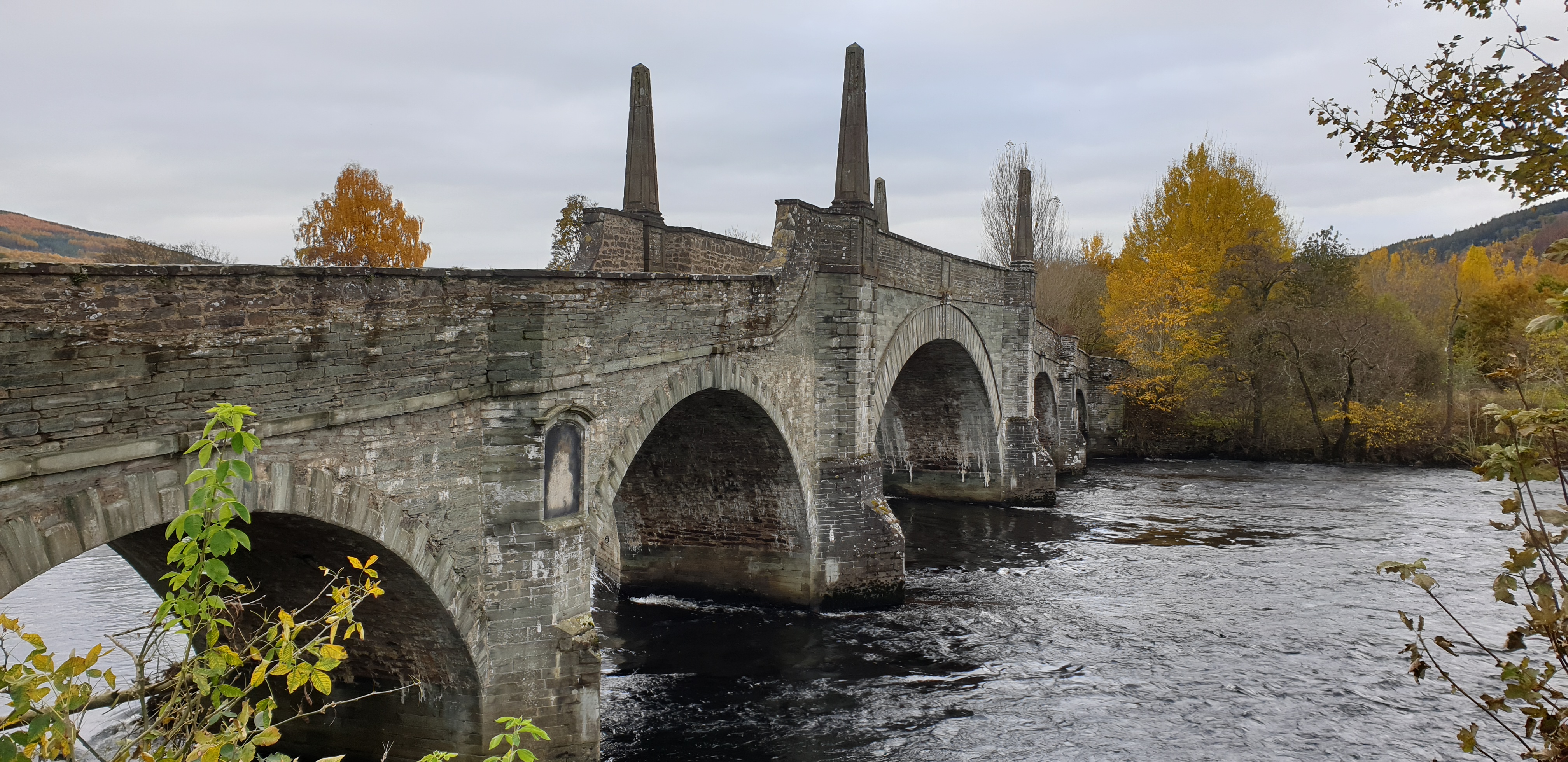
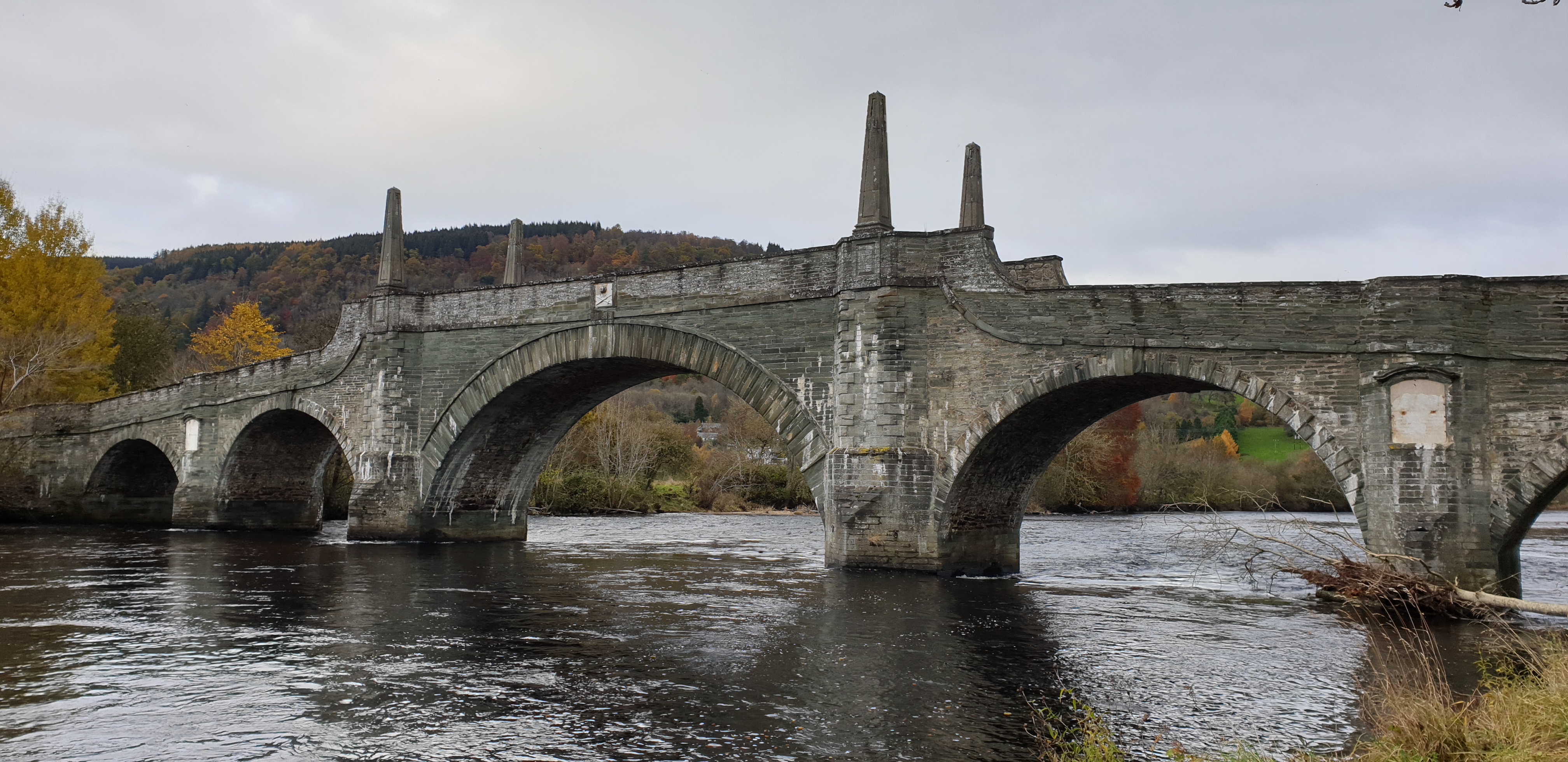
Exploring Aberfeldy further, we found an amazing bridge over the Tay River, built in 1733 to ward off and ‘threaten’ the Jacobites. In those days, Aberfeldy was nothing but a few thatched cottages, so to have this massive bridge built literally in the middle of a flood plain and farm paddock, was certainly sending a messsge to the Highlanders about Royalist power.
Not far from the river bank is the Black Watch memorial, a special and reverred Scottish Regiment of soldiers, born in the aftermath of the first Jacobean Rebellion of 1715. The soldiers wore black tartan to distinguish themselves from the Royalist redcoats.

The statue and where it was sited overlooking the Royalist built bridge, was very imposing.
We drove along the north bank of the river from Aberfeldy to Ballinluig, absolutely beautiful, then headed north to Pitlochry. Our destination was the site of the 1689 Battle of Killiecrankie, one of the few the Jacobites could actually call a victory. The Visitor’s Centre was closed for the winter, but we wandered around the wooded paths, incredulous really that this terrain could sustain any kind of battle. It was very steep, rocky, and heavily wooded.
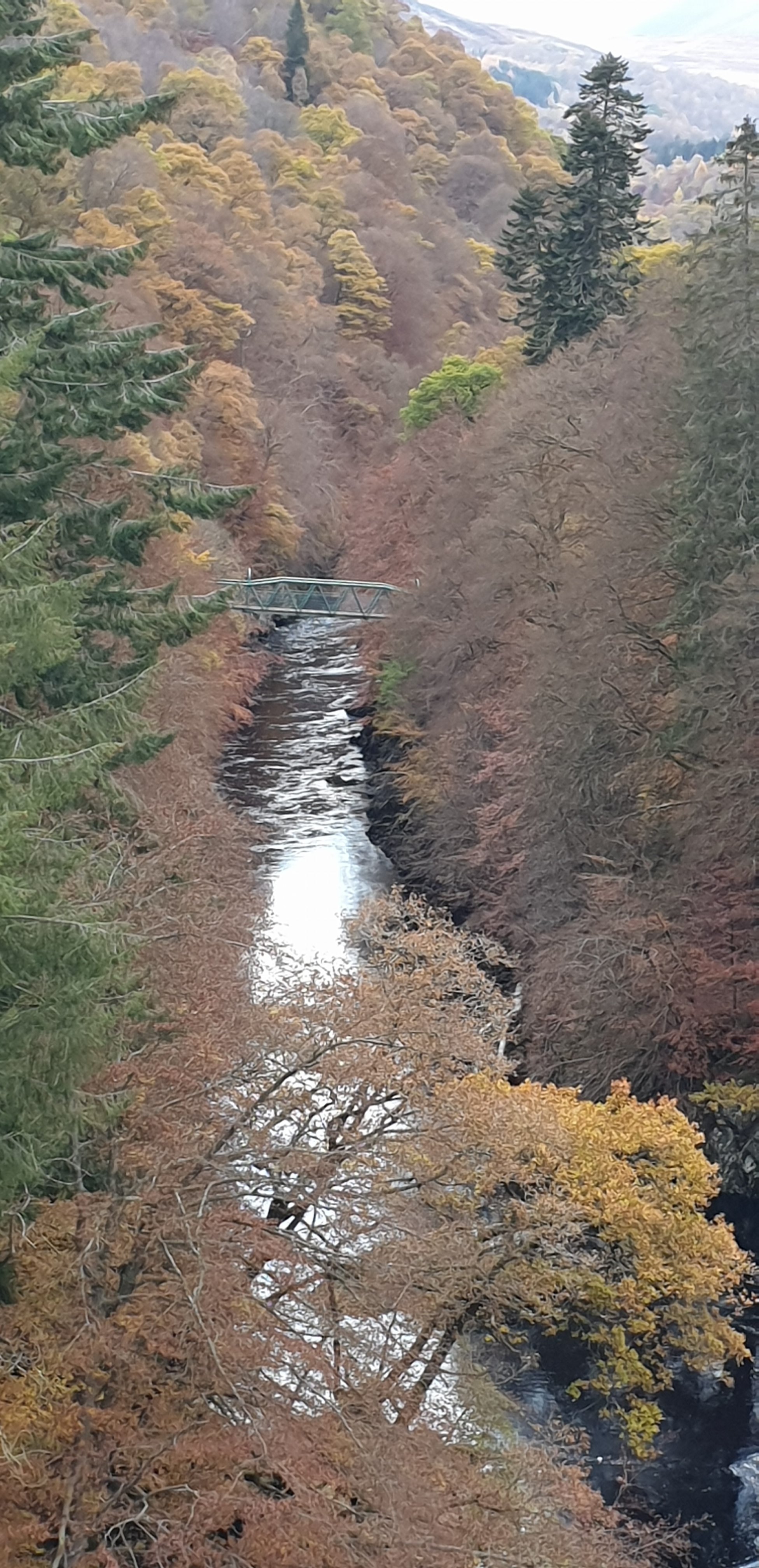
‘Soldiers Leap’ is purported to be where one of the government soldiers, Donald McBean, leapt 5.5m across the Garry River at a fairly precarious spot, to avoid capture. (Pic from google).
The modern bridge over the Garry River now hosts bungy jumping.
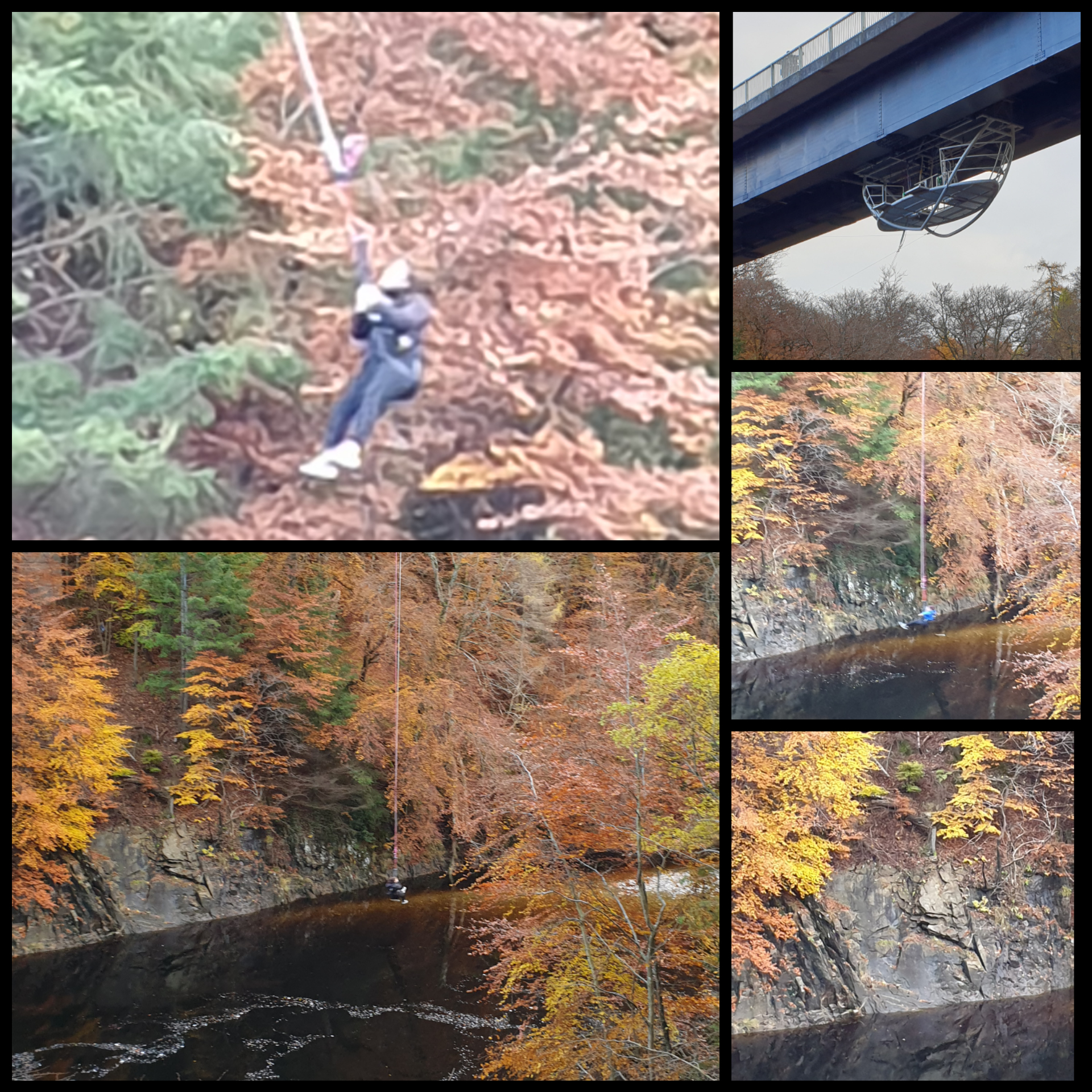
Was I weird in thinking that not much had changed in 300 years? The ultimate highland fling!
We still had one important stop for the day, and it was getting late. We drove at a healthy pace alongside Loch Tummel to Kinloch Rannoch (what a great name, saying it even without an accent sounds so Scottish), then back past Dunalastair Reservoir.
I didn’t want to overdo my enthusiasm for film sets that some may have thought I’d done in Iceland, banging on an on about them every paragraph.
But I’d held it in all day!
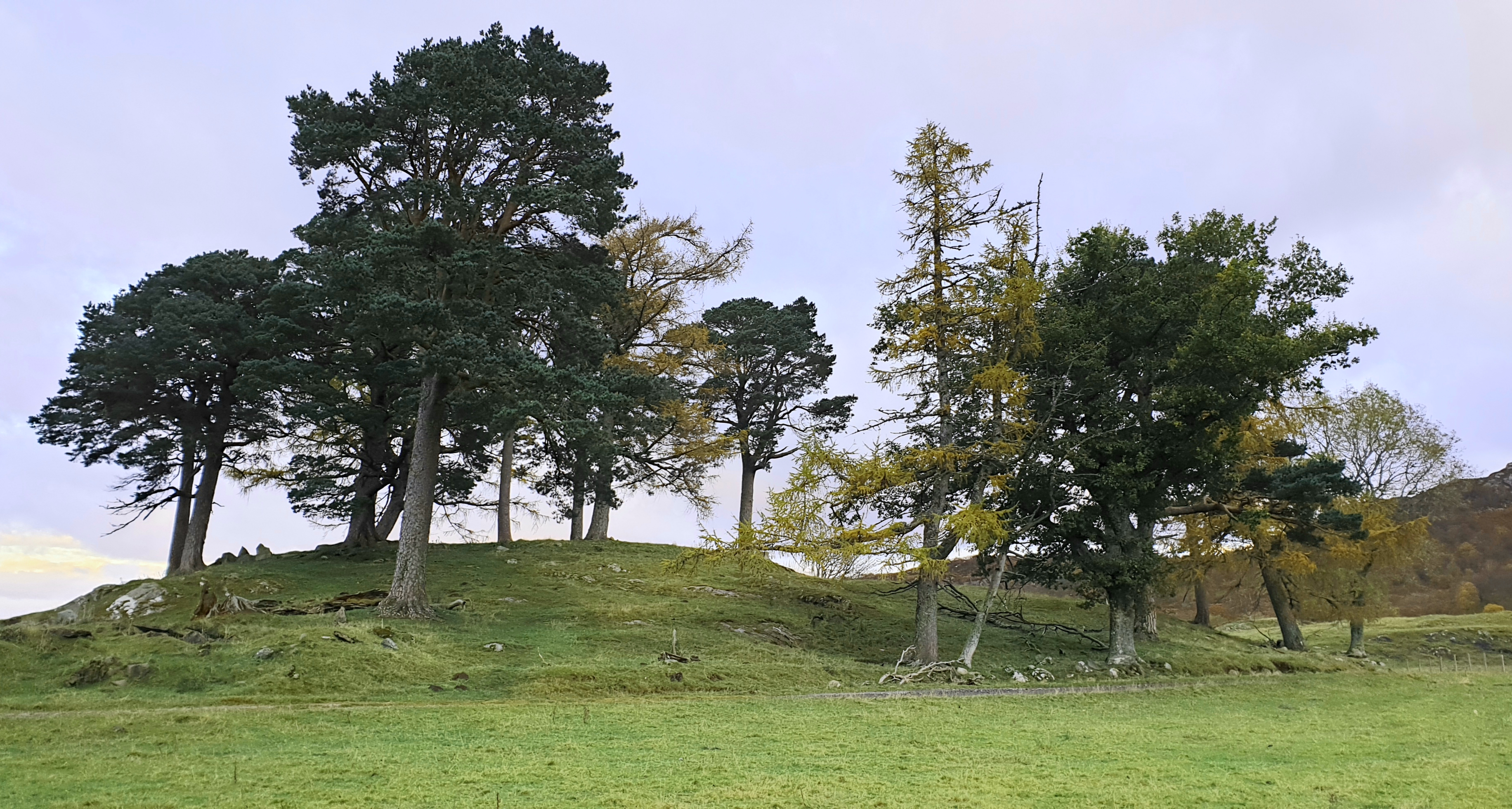
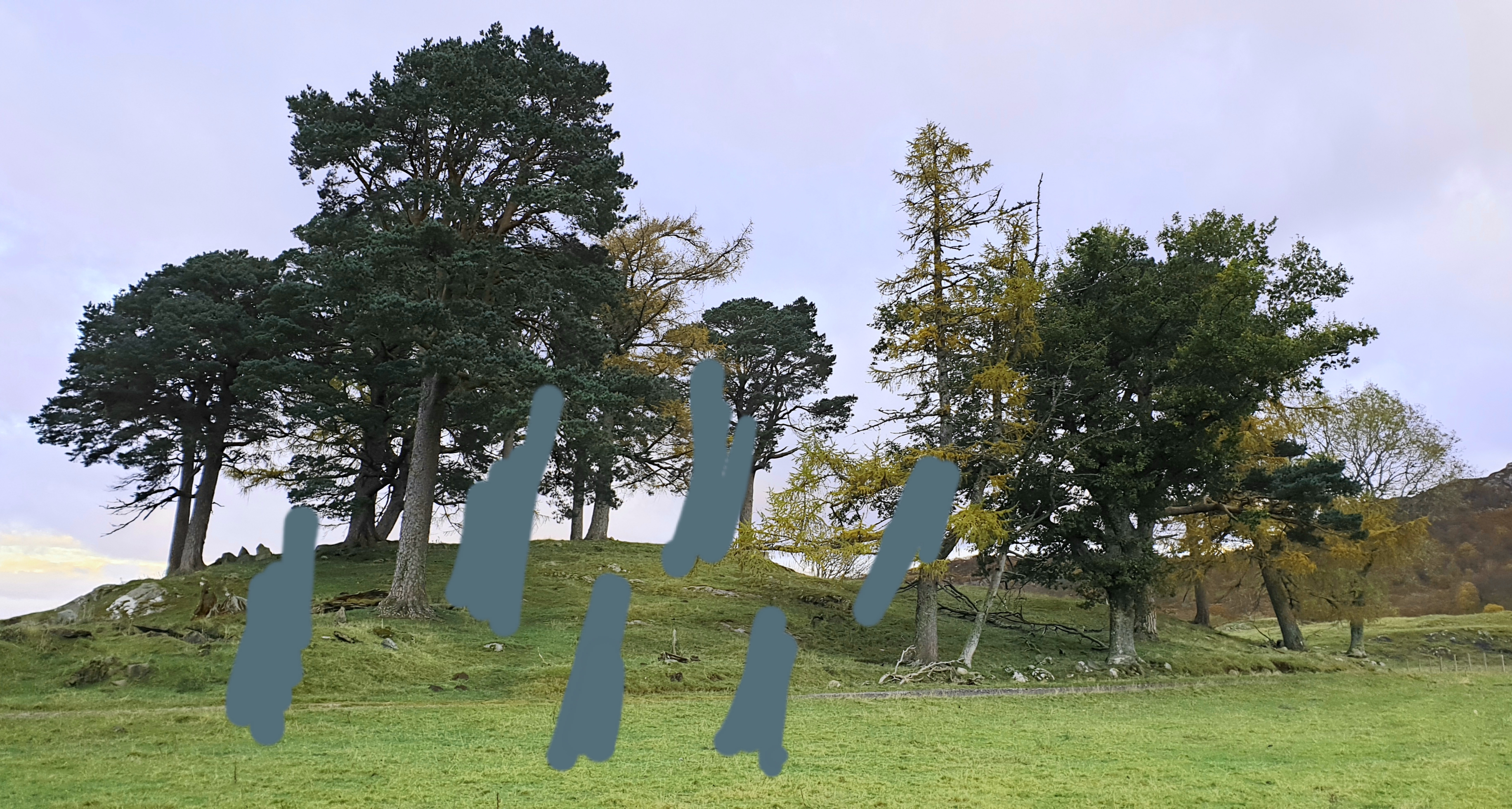
I walked around the hillock in absolute rapture!
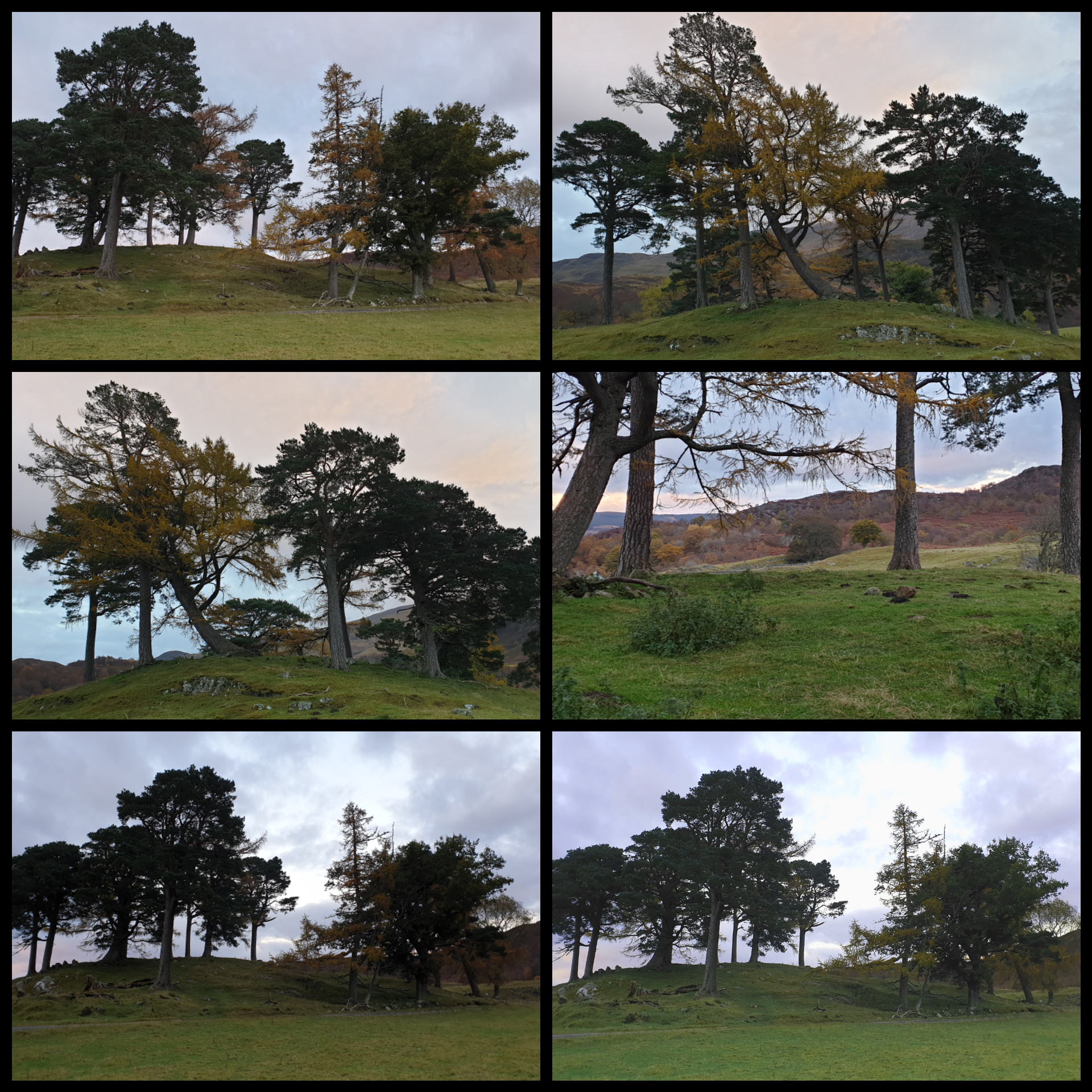
Of course the standing stones don’t really exist, so I had to weave a bit of Katie’s magic.
 Kanga And Wombats Adventures