
After the excitement of this morning and all the Marjoribanks revelations, I needed a quiet day.
But we had to be at Scrabster (such a great name), by 12.15 to catch the ferry to Stromness on the Orkneys. Google told us it would take 3 hours. And guess what? It did!
Along the way, there wasn’t time for many stops, but we checked out Dunrobin Castle before heading across the apron from the east to the north coast at the most northern part of Scotland. Desolate and windswept, it was littered with abandoned stone buildings, remnants of the ‘clearances’ (more later), with more than a few wind farms concentrated like windmill forests above us.

But of course, in typically Partland/Jones style, we left earlier than we needed to, so arrived well ahead of schedule. It gave us time to explore Thurso.
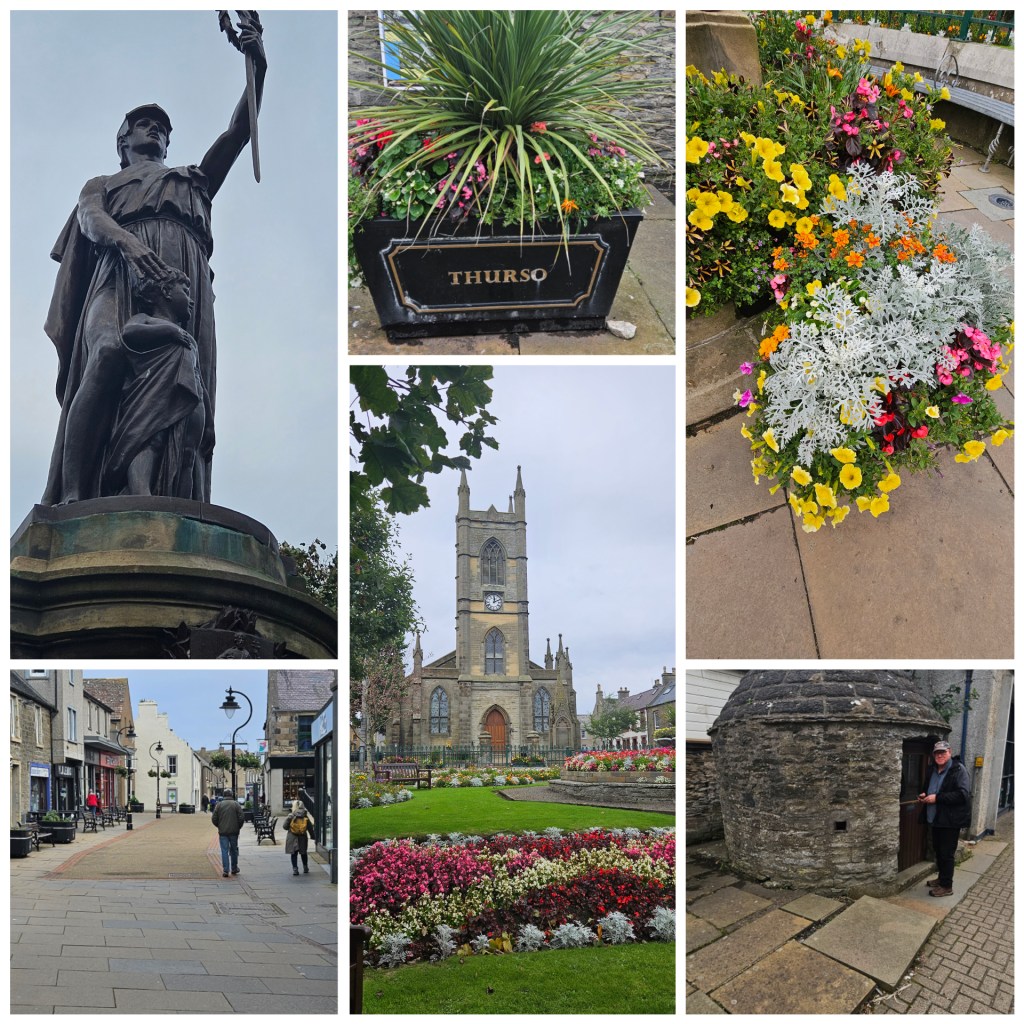
Thurso boasts being the birthplace of Sir William Alexander Smith, the founder of the Boy’s Brigade (think Presbyterian scouts). It’s a very pretty little town with a profusion of colour in the gardens around the church, despite it being Autumn. In the pic above, John is standing outside what was the town’s drinking well.
We had time for a quick lunch at the harbour tearooms, possibly the worst burgers we’ve ever tasted, but the sign in the ladies loo made me smile.

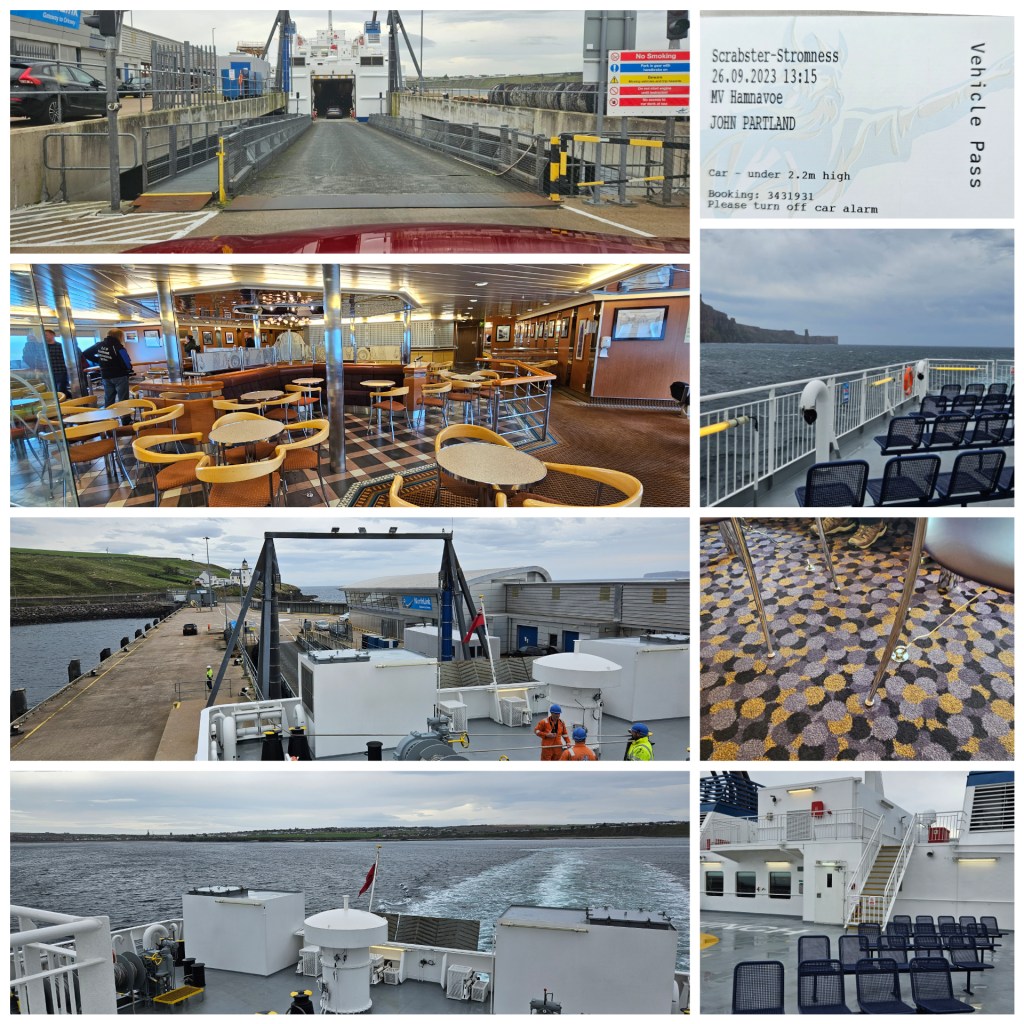
Boarding the ferry to Stromness was an easy affair, much less stressful than our last car ferry trip to Kangaroo Island. Not a full load, so not packed in like sardines. Mind you, the cables attaching the chairs to the floor in the lounge area was a tad off-putting!
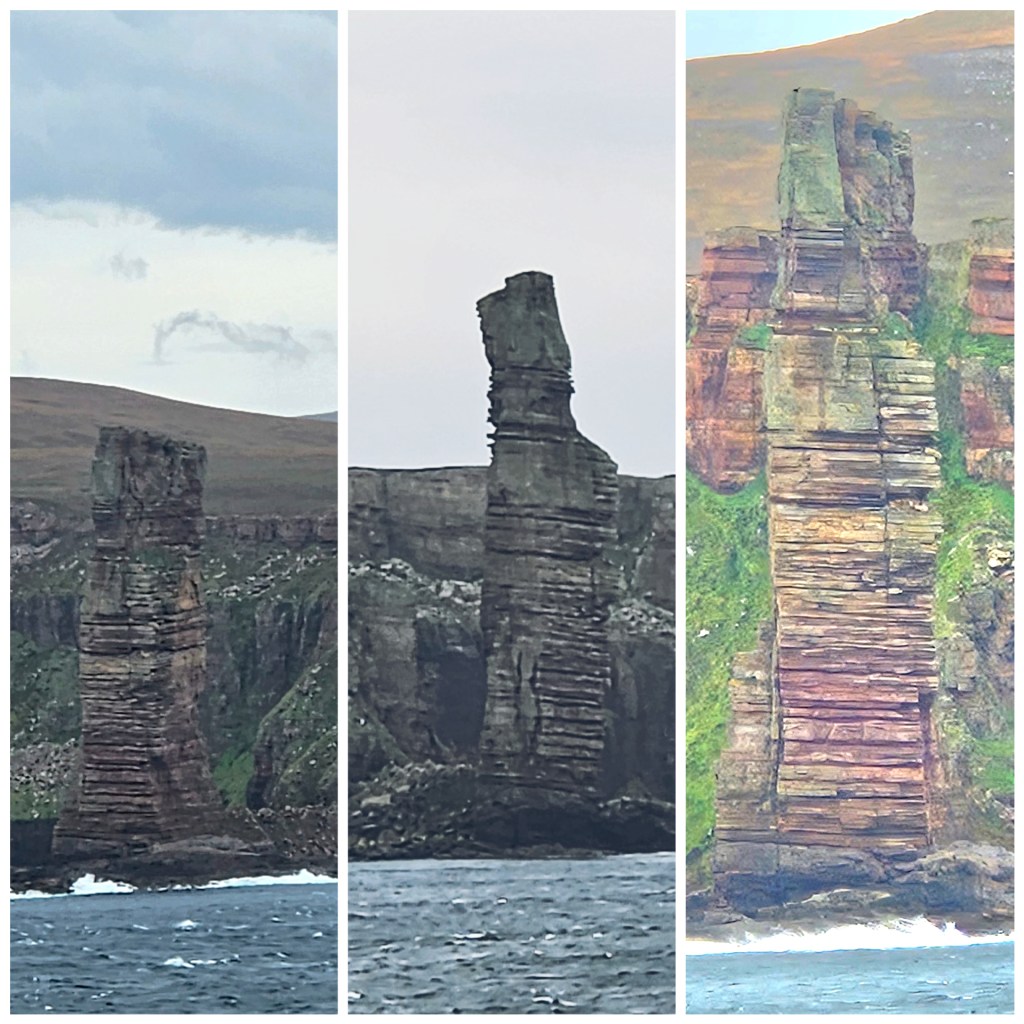
As the Isle of Hoy appeared, we braved the blowy conditions to capture a glimpse of this iconic beauty. The ship’s captain took us pretty close!
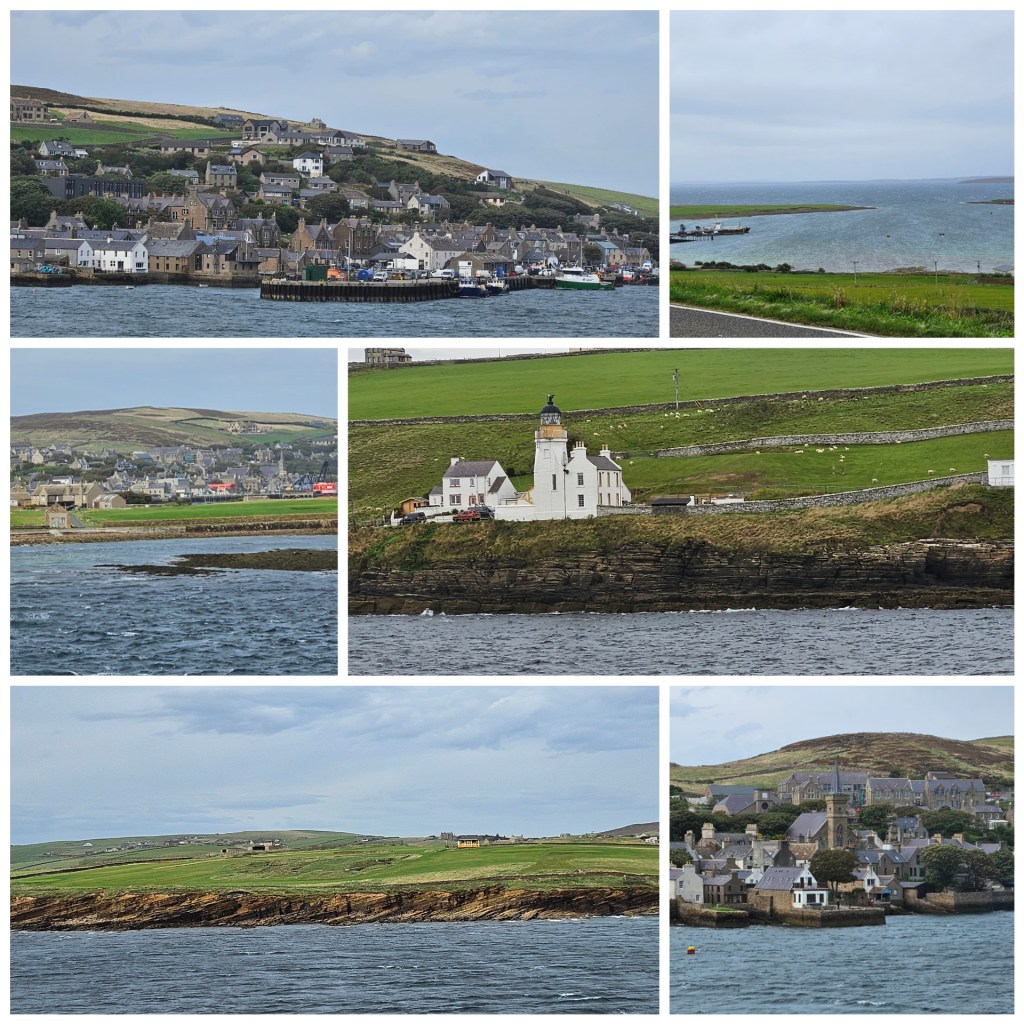
Stromness village appeared and we were quickly offloaded and on our way. Rolling green hills and lots of farms were dotted everywhere, just as I’d imagined.
Our first stop was the Churchill Barriers, named after the great man who ordered that they be built. After a German U-boat sank HMS Royal Oak in 1939, Sir Winston had causeways of concrete blocks erected across the channels on the eastern side of Scapa Flow, linking Mainland to the islands of Lamb Holm, Glimpse Holms, Burra and South Ronaldsay. The Churchill Barriers, flanked by rusting wrecks of block ships, now support the main road from Kirkwall to Burwick.
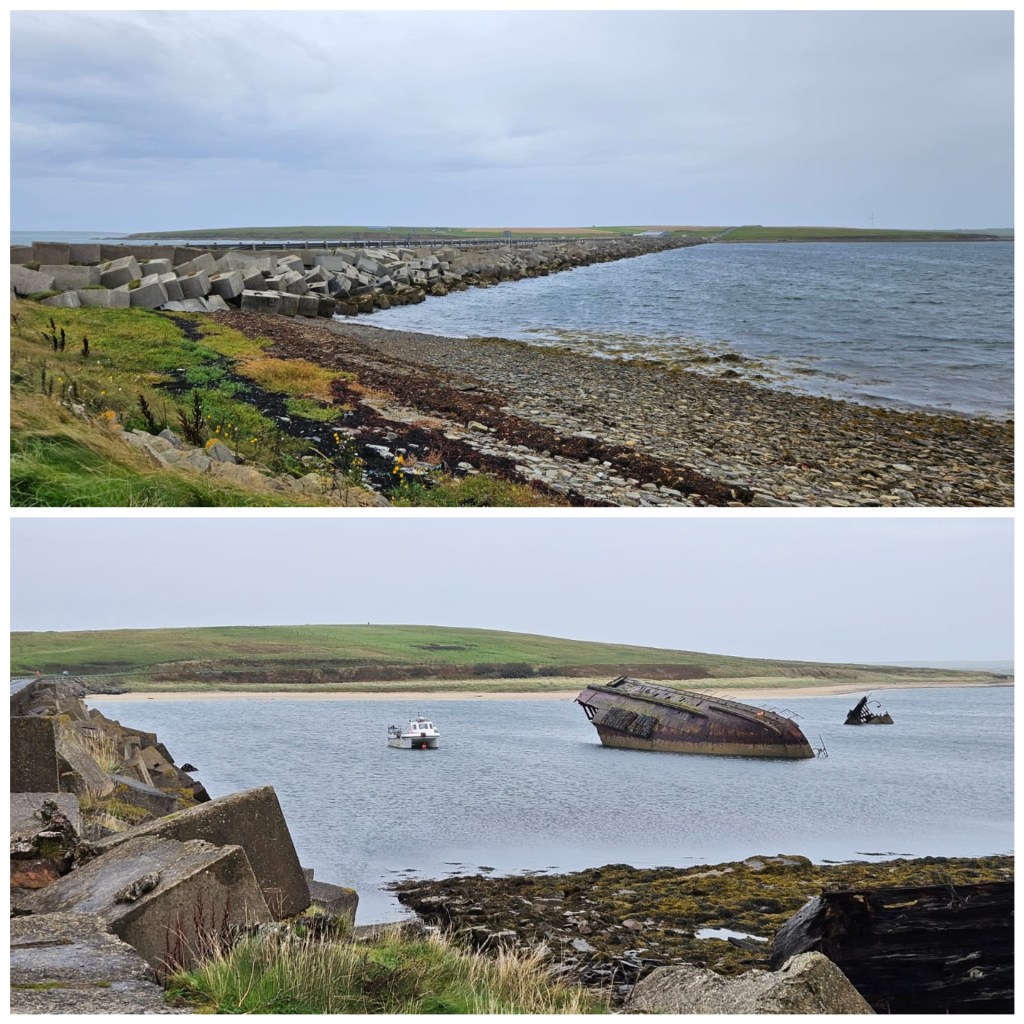
Up the hill on Lamb Holm, sits the Italian Chapel, all that remains of a POW camp that housed the Italian soldiers who worked on the Churchill Barriers. They built the chapel in their spare time from wood and metal scraps. It’s quite extraordinary.

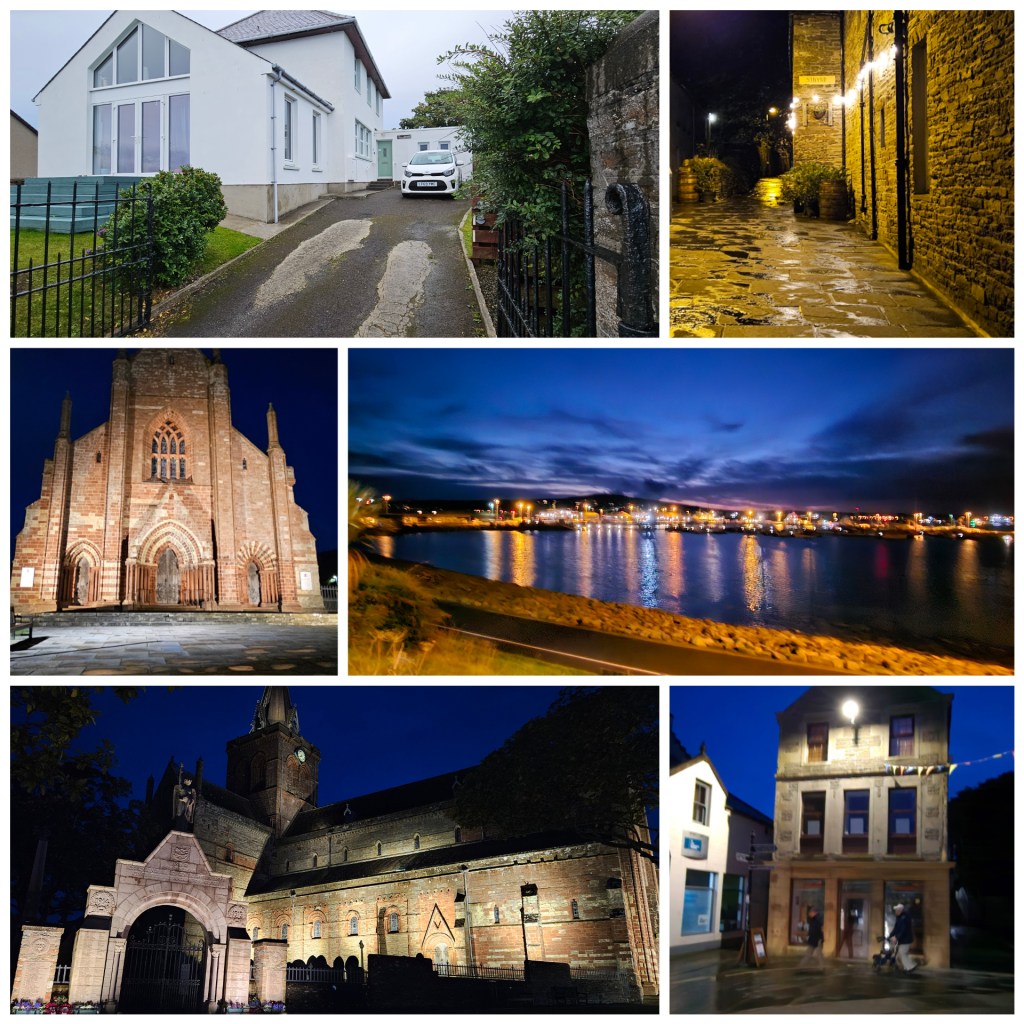
After finding our Airbnb for the next 2 nights, we explored Kirkwall, grabbed some dinner and headed home.
 Kanga And Wombats Adventures
Hope you bought something!
LikeLike